

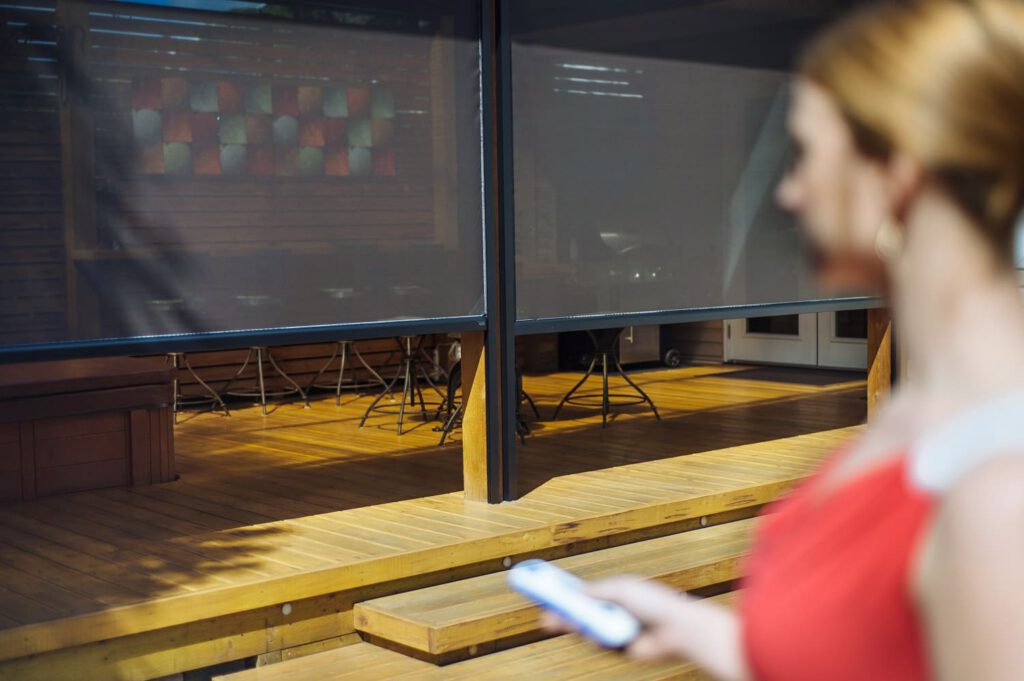
Anyone who has spent a July afternoon on a west-facing patio in Tampa knows the deal. By 3 p.m. the concrete is radiating heat back at you, the ceiling fan is doing nothing useful, and the iced tea is warm before you finish it. The sun does not care that you wanted to enjoy your outdoor space.
Exterior shades are one of the better fixes we install around here. Not interior blinds. Not tinted windows. Shades that mount on the outside of your home and stop the heat before it ever gets through the glass.

Why outside beats inside
Here is the part most people miss. Once sunlight passes through a window, the heat is already in your house. Interior blinds and curtains can block the light, sure, but the energy has already crossed the glass and warmed the air on your side of it. You are essentially mopping up after the flood.
Exterior shades stop the sun outside the building envelope. The heat bounces off and dissipates into the air instead of into your living room. Studies have shown exterior shading can reduce solar heat gain by up to 75% — a number you will absolutely feel on your electric bill in August.
What they actually look like
These are not your grandmother’s awnings. Modern exterior shades roll up into a slim aluminum housing mounted above the window or opening. When you want them down, they drop quietly into place. When you don’t, they disappear.
Most of the systems we install are motorized. You can run them from a remote, a wall switch, or your phone. A few of our customers have them on timers so the shades drop automatically before the afternoon sun hits the back of the house. They are sitting in air-conditioned comfort by the time the worst heat arrives.
Florida-specific reasons to consider them
The Gulf Coast sun is brutal on more than just your comfort. UV exposure fades hardwood floors, bleaches furniture, and cracks leather upholstery over time. If you have a great room with big west-facing windows, you have probably already noticed certain spots on the rug looking lighter than others. Exterior shades cut that UV before it ever hits anything inside.
And then there is the lanai. A covered patio in Tampa Bay is supposed to be the best room in the house. But without shade on the open sides, the late-afternoon sun pours in sideways and the space turns into a slow oven. Drop a shade on the exposed side and suddenly you can actually sit out there in July.
You can still see out
This is the question we get most often, and the answer surprises people. The mesh used in exterior shades comes in different openness factors — basically how tightly the weave is constructed. A 3% openness mesh blocks most of the sun but still lets you see through to your yard or the water. A 10% openness lets in more view and breeze but blocks less heat. We help you pick the right one based on which direction the shade is facing and what you want from it.
For waterfront homes we often go with a lighter mesh on the view side so the family can still see the bay or the canal from the kitchen. The west side of the same house might get a darker, denser mesh to handle the afternoon sun.
What about wind and storms
Good question. The shades we install have wind sensors as an option — if gusts pick up beyond a set threshold, the shades retract automatically. For everyday afternoon thunderstorms, you just hit the button and they roll back up into the housing. The mesh and the housing both stay protected when not in use, which is a big part of why these systems last as long as they do down here.
Does it actually save money
Real numbers vary based on your home, your insulation, and your habits. But customers tell us their cooling bills drop noticeably once the shades are in. One client in South Tampa with a wall of west-facing glass said her July electric bill came down by about $80 the first summer. Another in Clearwater said her great room finally stays cool enough that she stopped running a portable AC unit out there.
The payback period depends on your situation, but for homes that take a serious beating from the sun, the math gets interesting pretty fast.
Want to talk it through
Every home is different. Some only need shades on one or two openings. Others want the whole back of the house covered so the lanai becomes truly usable year-round. We come out, measure, look at the sun exposure, and tell you what would actually help — not just what we want to sell you.
The estimate is free, and we cover all of Hillsborough, Pinellas, and Pasco counties. Give us a call at 1-727-372-5900 or send us a note through the contact page when you’re ready.
Leave a Reply